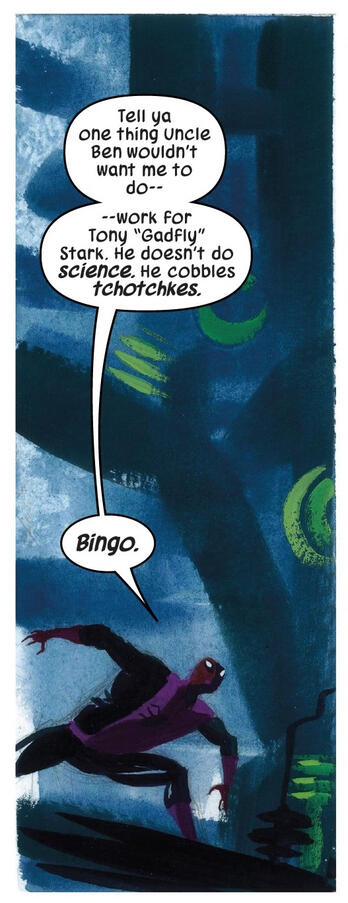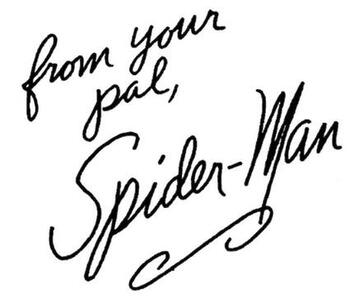
the amazing spider-mensch: the case for a jewish peter parker

Consider the cultural landscape of the early 1960s. A scrawny, dark-haired teenager—intellectually inclined, socially awkward, and persistently bullied by a conventionally attractive, blonde, athletic peer—would have been instantly recognizable to many readers of the era as a familiar archetype. In American media of the time, this configuration often mapped onto Jewish-coded representations of outsider identity: the “outsider genius” navigating a world structured around social dominance, assimilation pressures, and exclusion.That same dynamic is foundational to the earliest Spider-Man stories. Peter Parker’s appearance, academic focus, and social marginalization are not incidental details; they form the core of his identity as a character. While the text never explicitly identifies him as Jewish in these early issues, these traits contribute to a broader pattern of cultural coding that many readers and scholars have since recognized as aligning with Jewish-American representation in mid-century fiction.At a thematic level, Spider-Man’s moral philosophy strongly parallels the Jewish ethical concept of tikkun olam, the responsibility to repair or improve the world. This principle gained increased visibility in American Jewish discourse during the mid-20th century, particularly in relation to social reform movements. Spider-Man’s defining maxim—“with great power comes great responsibility”—is not a direct translation of this idea, but it operates in a strikingly similar ethical register: power is not personal privilege, but a mandate toward responsibility for others.It is also important to note that, during the early decades of superhero comics, it was not common or straightforward to explicitly identify major characters as Jewish. Jewish identity was often implied, coded, or left unspoken rather than directly stated, particularly for marquee heroes intended for broad commercial audiences. For much of comics history, explicit confirmation of Jewish identity was rare or delayed. For example, Kitty Pryde is widely regarded as one of the first openly and proudly Jewish superheroes in mainstream comics. Similarly, Ben Grimm—despite being visually depicted engaging in Hanukkah observance by Jack Kirby decades before—was not explicitly confirmed as Jewish in-text until 2005. These cases illustrate how Jewish identity in comics was often present in subtext or creator intent long before it was formally acknowledged within continuity.It is therefore unsurprising that a character co-created by Stan Lee would reflect elements of this worldview. However, by his own accounts and those of others, Lee did not consciously set out to make Peter Parker explicitly Jewish. Instead, these resonances are often understood as emerging organically from his personal background, creative instincts, and the cultural environment in which he was working.This ambiguity is consistent with broader interpretations of Lee’s creative process and his complex relationship to Jewish identity, which has been documented in biographical scholarship. For a more in-depth examination of this dimension of his life and work, Abraham Josephine Riesman’s True Believer: The Rise and Fall of Stan Lee offers a detailed and critical account.Taken together, these elements suggest that reading Peter Parker as Jewish—whether explicitly or through cultural and ethical coding—is not a retroactive imposition, but a coherent interpretation grounded in the character’s original context, thematic structure, and historical setting.This Carrd presents compiled evidence in support of this interpretation.

humor & language

Tied to Peter Parker’s use of Yiddish is his broader speech pattern and rhetorical style, particularly his use of sarcasm and verbal emphasis. Below is an excerpt from The New Joys of Yiddish by Leo Rosten describing how Yiddish linguistic structures and cadence often carry over into English usage among speakers influenced by it.

Colloquial Uses in English of Yiddish Linguistic Devices
But words and phrases are not the chief "invasionary" forces Yiddish has sent into the hallowed terrain of English. Much more significant, I think, is the adoption by English of linguistic devices, Yiddish in origin, to convey nuances of affection, compassion, displeasure, emphasis, dis- belief, skepticism, ridicule, sarcasm, scorn. Examples abound:
1. Blithe dismissal via repetition with a sh play on the first sound: "Fat-shmat, as long as she's happy." (This is somewhat similar to the English "teeny-weeny," "razzle-dazzle," etc. This device is called, technically, "second-order reduplication.")2. Mordant syntax: "Smart, he isn't.”3. Sarcasm via innocuous diction: "He only tried to shoot himself." 4. Scorn through reversed word order: "Already you're discouraged?"5. Contempt via affirmation: "My son-in-law he wants to be."6. Fearful curses sanctioned by nominal cancellation: “A fire should burn in his heart, God forbid!"7. Politeness expedited by truncated verbs and eliminated preposi- tions: "You want a cup coffee?"8. Derisive dismissal disguised as innocent interrogation: "I should pay him for such devoted service?"9. The use of a question to answer a question to which the answer is so self-evident that the use of the first question (by you) consti- tutes an affront (to me) best erased either by a) repeating the origi- nal question, or b) retorting with a question of comparably asinine self-answeringness. Thus:[A]
Q: "Did
you write your
mother?"
A: "Did I write my mother!" (Scornful, for “Of course I did!")
[B]
Q: "Have you visited your father in the hospital?"
A: "Have I visited my father in the hospital?" (Indignant, for "What kind of a monster do you think I am?")
[C]
Q: "Would you like some chicken soup?"
A: "Would I like some chicken soup?" (Emphatically concurring, for "What a stupid thing to ask.")
[D]
Q: "Will a hundred dollars be enough?"
A: "Will a hundred dollars be enough?” (Incredulously offended, for "Do you think I'm crazy enough to accept so ridiculous a sum?”)
[E]
Q: "Will a thousand dollars be enough?”
A: "Will a thousand dollars be enough?" (Incredulously delighted, for "Man, will it!")
[F]
Q: "Will you marry me?”
A: "Will I marry you?” (On a note of overdue triumph, for "Yes, yes, right away!")
Or consider the growing effect on English of those exquisite shadings of meaning, and those priceless nuances of contempt, that are achieved in Yiddish simply by shifting the stress in a sentence from one word to another. "Him you trust?” is entirely different, and worlds removed, from "Him you trust?" The first merely questions your judgment; the second vilipends the character of the scoundrel anyone must be an idiot to repose faith in.Or consider the Ashkenazic panoply in which insult and innuendo may be arrayed. Problem: Whether to attend a concert to be given by a neighbor, niece, or friend of your spouse. The same sentence may be put through maneuvers of matchless versatility:1. "Two tickets for her concert I should buy?" (Meaning: “I'm hav- ing enough trouble deciding if it's worth one.")2. "Two tickets for her concert I should buy?" ("You mean to say she isn't distributing free passes? The hall will be empty!")3. "Two tickets for her concert I should buy?” (“Did she buy tickets to my daughter's recital?")4. "Two tickets for her concert I should buy?” (“You mean to say they call what she does a 'concert'?!")5. "Two tickets for her concert I should buy?” (“After what she did to me?")6. "Two tickets for her concert I should buy?” (“Are you giving me lessons in ethics?")7. "Two tickets for her concert I should buy?" ("I wouldn't go even if she gave me a complimentary!")Each of the above formulations suggests a different prior history, offers the speaker a different catharsis, and lets fly different arrows of contumely. And if all emphasis is removed from the sentence, which is then uttered with mock neutrality, the very unstressedness becomes sardonic, and if accompanied by a sigh, snort, cluck, or frown-lethal.
The New Joys of Yiddish by Leo Rosten

Peter’s dialogue frequently reflects this kind of expressive structure—emphasis on specific words, rapid tonal shifts, and sarcasm embedded directly into sentence construction. This pattern is a consistent part of his characterization.
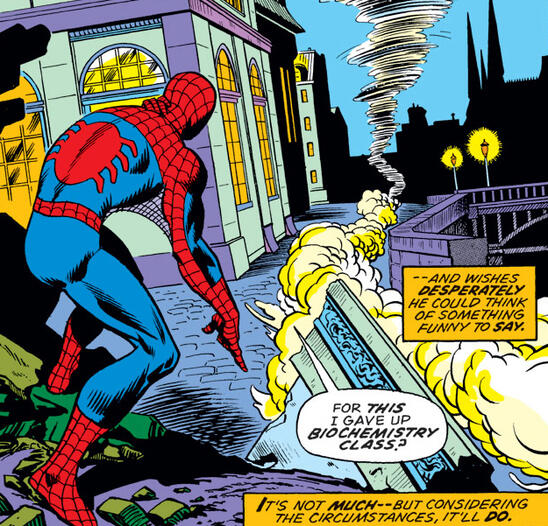
The Amazing Spider-Man (1963) #143
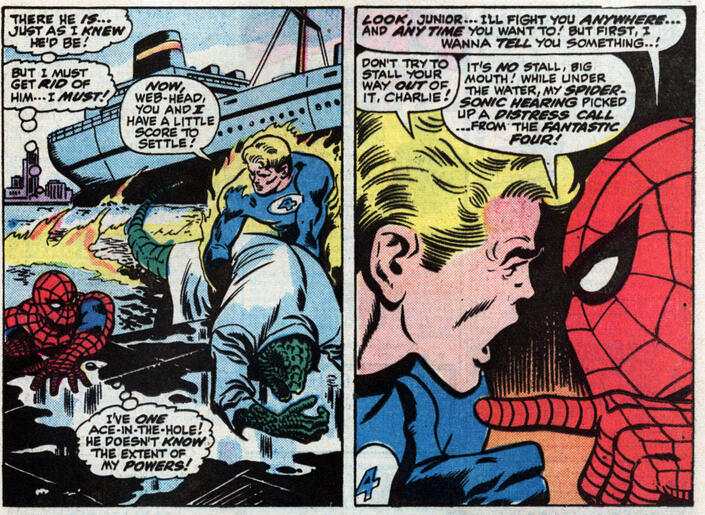
Marvelous Tales (1964) #58

While these traits are often generalized as a “New York accent,” they are more accurately understood as regionally and culturally specific speech patterns, particularly associated with Queens. Each borough of New York City developed distinct linguistic tendencies shaped by immigrant communities and settlement patterns.For comparison, Fran Drescher—a Jewish actress from Queens known for her distinctive voice and cadence—demonstrates a similar expressive rhythm and tonal inflection. Every borough carries its own variation of New York speech, influenced by the cultural and linguistic backgrounds of its residents.In Peter’s case, his origin in Forest Hills, Queens is significant. Historically, Forest Hills has had a substantial Jewish population and is often identified as part of the broader cultural landscape of Jewish New York.
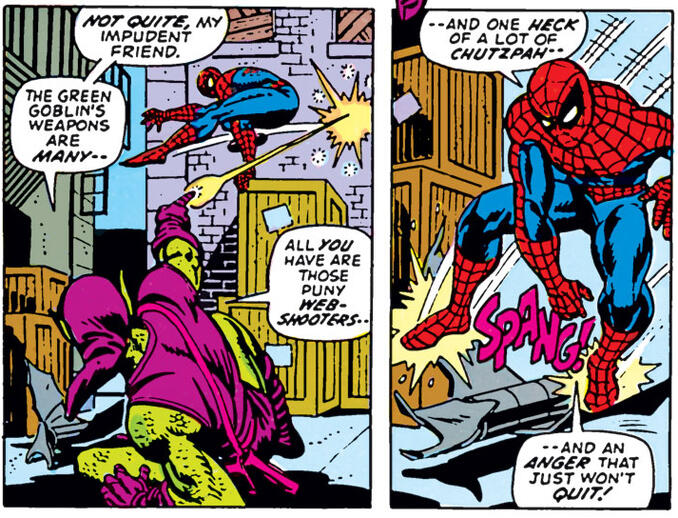

The Amazing Spider-Man #122
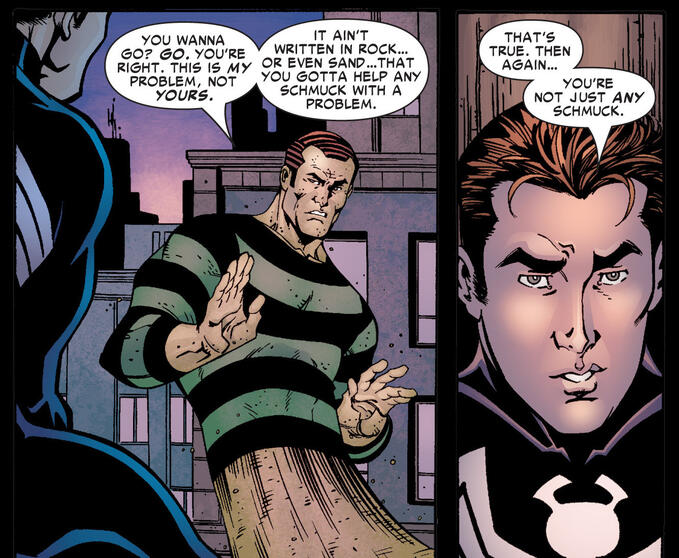
Friendly Neighborhood Spider-Man #18
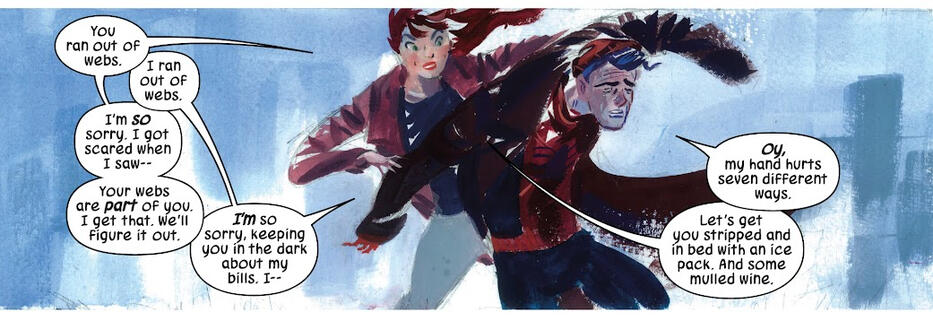
Marvel #1
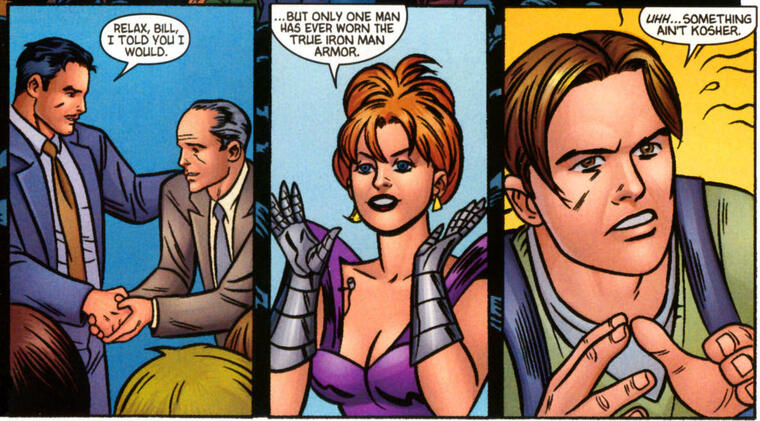
Ultimate Marvel Team-Up #4
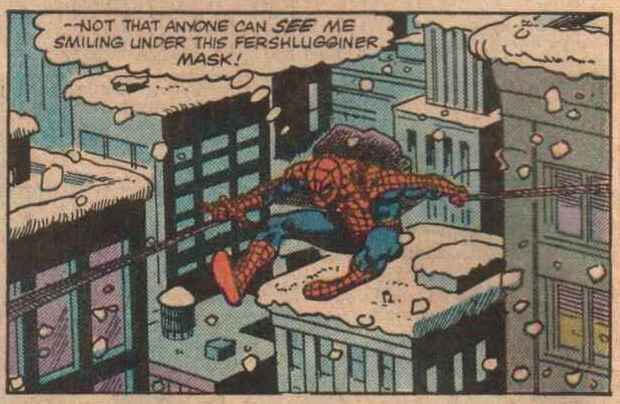
Marvel Team-Up (1972) #127
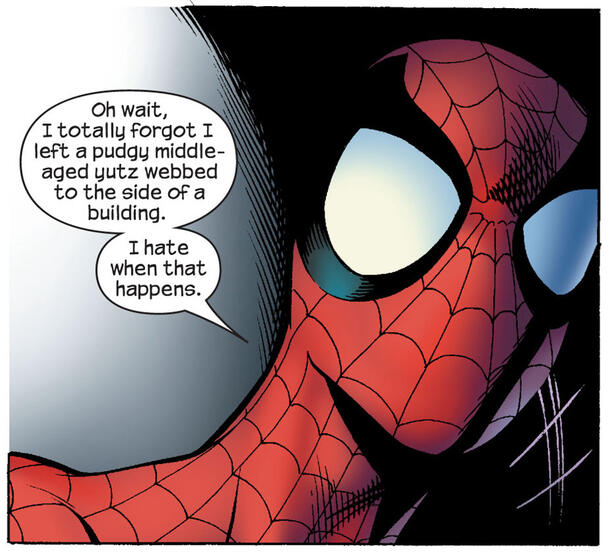
Ultimate Spider-Man (2000) #90
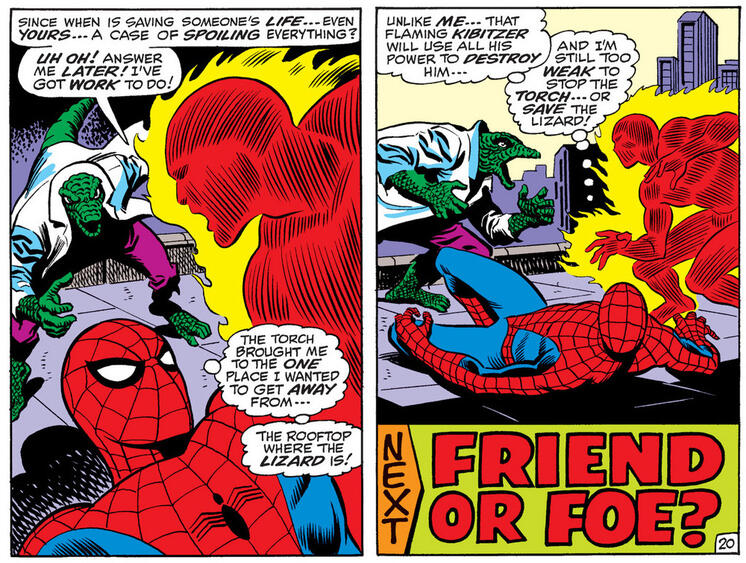
Spider-Man #76
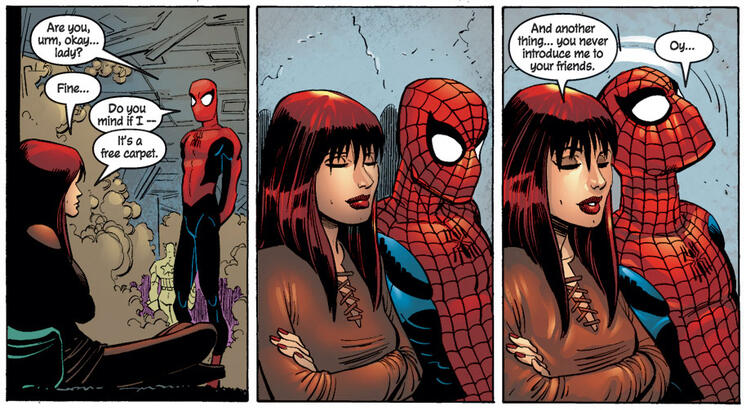
The Amazing Spider-Man (1999) #50
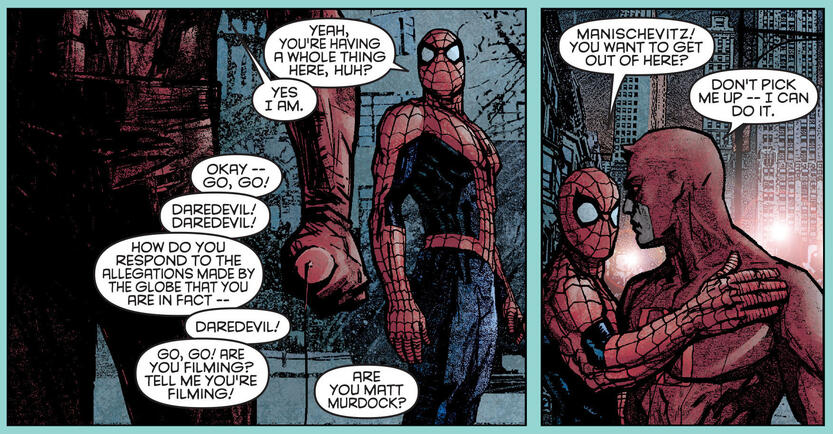
Daredevil (1998) #35

Ultimate Spider-Man (2000) #82
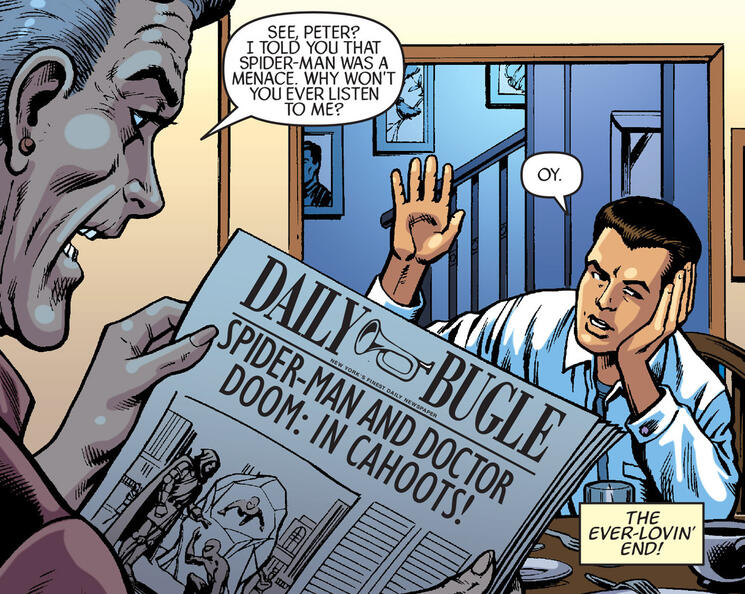
Spider-Man/Human Torch #1
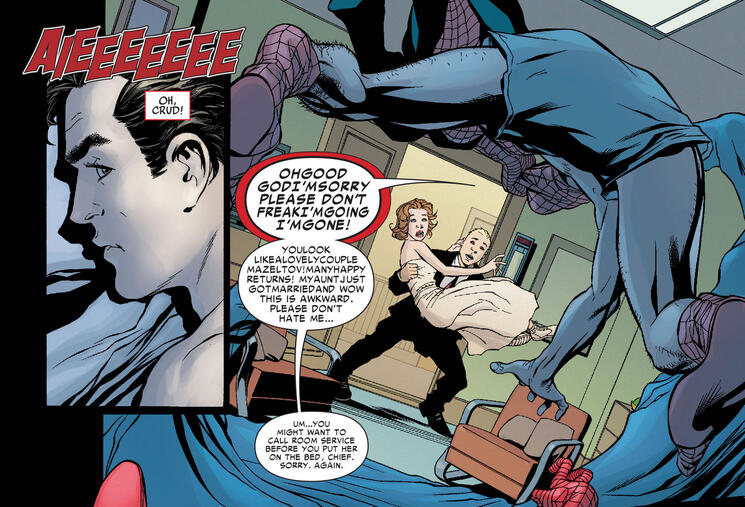
The Amazing Spider-Man (1963) #607

Ultimate Spider-Man (2000) #35
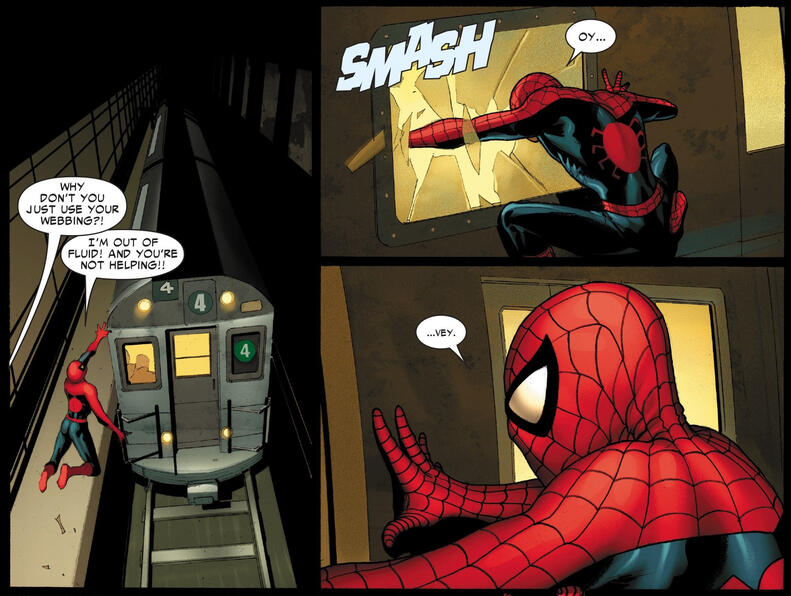
The Amazing Spider-Man (1963) #549
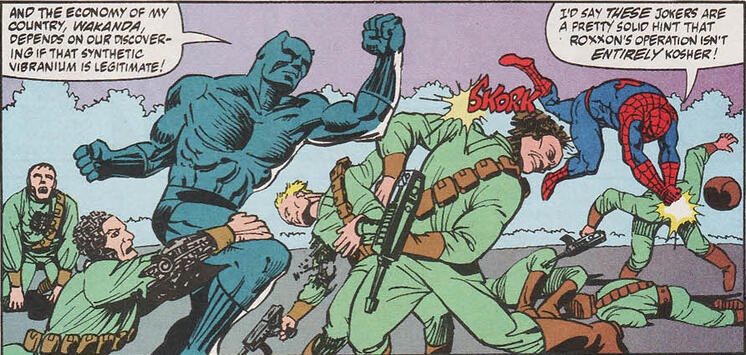
The Spectacular Spider-Man (1976) Annual #11
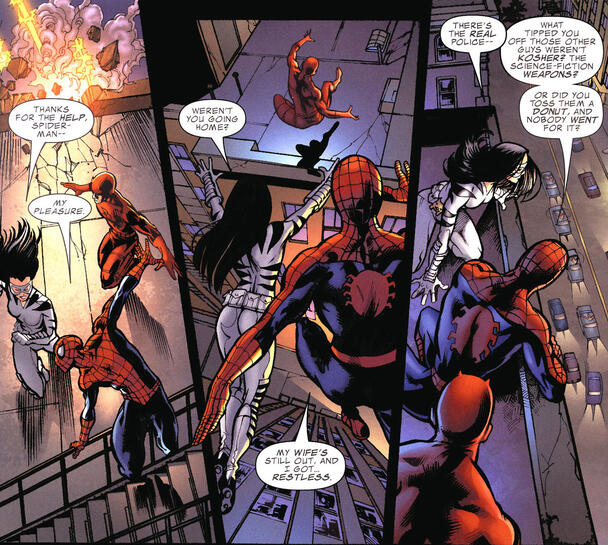
White Tiger (2007) #3
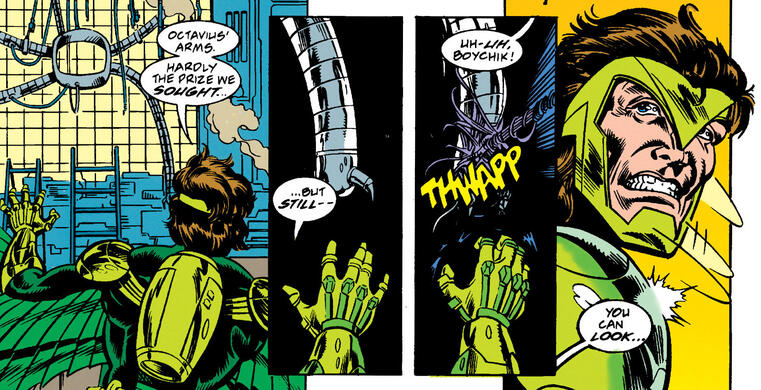
Spider-Man: Funeral for an Octopus #2

The Amazing Spider-Man (1963) #660

Marvel Team-Up (1972) #82

Spider-Man Marvel Unlimited Infinity

The Pulse (2004) #4

COMICS

Brian Michael Bendis, known for writing Ultimate Spider-man, co-creating several characters (Miles Morales, Riri Williams, and Jessica Jones), and winning five Eisner Awards for his work at Marvel. Here is an interview where he speaks about Peter Parker's coding.

Answers from Bendis’ Tumblr blog.

Danny Fingeroth, who is known for being a scholar of Jewish history in comics, worked as the editor of Spider-man at Marvel for years and has spoken about Peter Parker and Jewishness on numerous occasions. Here is an interview of one of those instances.Dan Slott, known for his work on Amazing Spider-man and Superior Spider-man, work at DC such as Batman Adventures, and being the recipient of an Eisner Award and multiple Diamond Gem Awards.

From Slott’s Twitter.

To call J. M. DeMatteis a comics legend is an understatement, with years of work on characters such as Spider-man and the Justice League under his belt. Here is an interview where he speaks about Peter Parker’s Jewish coding.


FILMS

Rodney Rothman, a director of Spider-Man: Into the Spider-Verse and a producer for Spider-Man: Into the Spider-Verse and Spider-Man: Across the Spider-Verse.

“Peter B. Parker is unique to our movie, but [his Jewishness] definitely came from a strong conviction I had and a joking argument we were having in the office,” Rothman said. “It’s our interpretation, knowing what we know about Stan Lee.”Growing up in Forest Hills and then in Scarsdale, Rothman was raised in a Reform Jewish home where Judaism was “always part of our lives,” he said. “I was bar mitzvahed. We observed all the holidays and traditions, and I’ve maintained that. It’s an important part of who I am. I have children now and it’s definitely part of how I raise them. I belong to a temple in Los Angeles and I’m looking forward to becoming more involved as my kids get older.”
Jewish Journal

CS: My favorite part of “Early Bird” was the section where you were doing Jdate, so I feel like this question is very specifically to you, Rodney: There’s a split second where we see the wedding of the main Peter Parker in the film. And when he gets married, he steps on the glass, so he’s Jewish. Can you talk a little bit about making Peter Parker explicitly Jewish?Ramsey: Yes, he can.Rothman: It was just something that I wanted to do. It was kind of a running joke that we had, was me insisting that Peter Parker was Jewish, but we’re not really saying—first of all, we’re not really saying Peter Parker is Jewish. It could be that MJ is Jewish in this universe. It could be that in an alternate universe, Buddhists step on glass. We don’t know. It’s an alternate universe. But I mean, I guess when I thought about Stan Lee and Forest Hills and Peter Parker… I thought for 15 frames, we can do this.
ComingSoon.net

Avi Arad, who founded Marvel Studios and has consistently been the executive producer or producer of every Spider-Man film.

Is Spider-Man Jewish?Well, this is a somewhat controversial statement, perhaps, but to me when Stan Lee, excuse me, Stanley Lieber, puts the family in Forest Hills, this is a first sign. These are practically shtetl Jews living in Queens. You look at Aunt May – she is tough as anything, tough as nails. She is a defender of the family. Uncle Ben thinks he is the protector but all she needs is “You, you go in the basement, sweep out the garbage.” This is like a shtetl play.Peter Parker, of course — his primary defense is his wit.
Times of Israel

Sam Raimi, an award-winning director, writer and producer who is best known for his work with the Evil Dead franchise and for directing the Spider-Man trilogy in the early 2000s.

"Did you know that Peter Parker is Jewish?" director Sam Raimi asked The Journal, referring to Spider-Man’s teenage alter ego.Raimi was joking, of course, but the 42-year-old director behind Columbia’s "Spider-Man" motion picture (out May 3, starring Tobey Maguire and Willem Dafoe) may be onto something. After all, it can be argued that the New York-based Marvel Comics superhero represents facets of your Jewish male stereotype. As Parker, he is angst-ridden, perpetually struggling with moral dilemmas. As the Amazing Spider-Man, Parker veils his personal pain behind a wisecracking demeanor — even as he battles deadly supervillains."Spider-Man is a character that spends his life trying to pay down his guilt," Raimi said. "The only difference is that it’s caused by his uncle, not his mother. That’s a real classically Jewish quality — to be very aware of your sins in this life and try and make amends for them in this life."Peter Parker, of course — his primary defense is his wit.
Jewish Journal

Phil Lord and Chris Miller, the directors of Spider-Man: Into the Spider-Verse, discussed the same topic of Peter being Jewish in the 60s in this interview clip.Michael Chabon, who played a massive role in writing Spider-Man 2 and has won a multitude of awards over the course of his career.

"Revenge is a typical motivation, like with Batman," says Chabon. "With Superman, there's a general sense of just wanting to do what's right. With the X-Men, there's fighting for one's own kind. But I don't think there's another comic-book superhero that's as completely driven by trying to pay some debt, a debt that can't be paid, as Spider-Man is."All that guilt has led to an amusing theory about Peter. "For years people have speculated that Peter was sort of crypto-Jewish," Chabon says. "You know, living with his uncle Ben and aunt May in Queens."
Newsweek


ACTORS

Andrew Garfield, an award-winning actor who played Peter Parker in the Amazing Spider-Man films.

“Spider-man is neurotic. Peter Parker is not a simple dude. He can’t just switch off,” Garfield told Time Out. “He never feels like he’s doing enough. And Peter suffers from self-doubt. He ums and ahs about his future because he’s neurotic. He’s Jewish. It’s a defining feature.”Garfield, 30, making his second big-screen outing as Spider-Man, adds: “I hope Jewish people won’t mind the cliché, because my father’s Jewish. I have that in me for sure.” The actor says of Spidey: “He’s an over-thinker. It would be much easier if he was a life-saving robot.”
Independent

Jake Johnson, who voices Peter B. Parker in Spider-Man: Into the Spider-Verse, spoke about how revolutionary the concept of Peter was in the 60s interview clip.


OTHER

Greg Weisman, known for his work on The Spectacular Spider-Man and Gargoyles.

From Weisman’s Twitter.

I myself KNOW that Pete is (whether practicing or not) of the Christian persuasion, because I've seen him celebrate Christmas over and over, but it always struck me as window-dressing to make the character appeal to the widest possible American audience. Because he's ALWAYS seemed Jewish to me. Perhaps that's because Stan Lee was/is Jewish and wrote him that way. Or maybe it's just me, being Jewish, reading it in. I toyed with the idea of having Pete's late mother being Jewish on Spec Spidey. But really, what would be the point? (And that was without asking Marvel if they'd have an issue with it.)
A Station Eight Fan Web Site


BUT...

Ultimate Spider-Man (2000) #106.

... WHAT ABOUT THIS PANEL? This panel comes from Ultimate Spider-Man (2000) #106, written by Brian Michael Bendis.Bendis has spoken at length about his interpretation of Peter Parker as Jewish-coded, and this perspective is reflected throughout his run on the series. He frequently incorporates Yiddish expressions into Peter’s dialogue, reinforcing this characterization in subtle but consistent ways. For further context on Bendis’s views, see the Creatives section.


... HE CELEBRATES CHRISTMAS. There’s a common assumption that Peter cannot celebrate Christmas if he is Jewish, but that idea doesn’t hold up under closer scrutiny. In contemporary culture, Christmas has largely evolved into a commercial and cultural holiday that extends beyond its religious origins. People from a wide range of religious and cultural backgrounds participate in its traditions, often as a way of engaging in shared social customs rather than expressing religious identity. Marvel, as a company, has long understood the broad appeal and marketability of placing its characters within these widely recognized cultural moments.

Batman Adventures: Holiday Special

As Harley Quinn puts it in Batman Adventures: Holiday Special, holiday imagery is “so bright and colorful an’ stuff”—a sentiment that captures the playful, visually engaging aesthetic that makes Christmas especially attractive in popular media.Within comics, it is also common for characters of differing religious backgrounds to take part in holiday celebrations as a gesture of community and togetherness. Participation in a holiday does not inherently signal adherence to the religion traditionally associated with it.

Teen Titans Go! (2014) #25

DC Rebirth Holiday Special

This pattern appears across multiple examples. In Teen Titans Go! (2014) #25 and DC Rebirth Holiday Special, characters celebrate Christmas regardless of their individual beliefs.

Marvel Holiday Special 2005

Similarly, Marvel Holiday Special 2005, published after Ben Grimm was explicitly identified as Jewish, features him embarking on a quest to save Santa Claus—without this narrative contradicting his Jewish identity. In fact, the previous year’s Marvel Holiday Special 2004 includes a scene in which Ben discusses celebrating Hanukkah on his own terms with Franklin Richards, reinforcing the idea that cultural participation and religious identity can coexist.

Marvel Holiday Special 2004

Another notable example appears in Christmas with the Super-Heroes (1989) #2, where Hal Jordan wishes others a happy Hanukkah years before his Jewish background was explicitly confirmed in Justice League: The Darkseid War: Green Lantern (2016) #1. Together, these instances illustrate a consistent theme within comics: characters can engage in shared cultural celebrations without compromising or redefining their religious identities.

A scene from Spider-Man: Into the Spider-Verse

This brings us to Spider-Man: Into the Spider-Verse, which offers one of the clearest on-screen indications of Peter Parker’s Jewish identity. In the wedding montage, Peter is shown stepping on a glass—a traditional element of Jewish wedding ceremonies—serving as an explicit cultural marker within the film.

Miles, Gwen and Peter from Into the Spider-Verse in an official holiday post

The film’s official Instagram account further reinforces this duality by sharing an image of Peter holding a Hanukkah mug while wearing a Santa hat. This blend of imagery reflects the same broader point: Christmas, in this context, functions as a cultural and commercial holiday rather than a strictly religious one. Peter even records a Christmas album, underscoring how participation in the holiday can be performative or market-driven rather than faith-based. From that perspective, it’s not surprising that a character—regardless of religious background—might engage with it.

Peter B. Parker's Christmas album in Into the Spider-Verse

The production itself also demonstrates a degree of intentionality in representation. Jewish actors were cast to voice key versions of Peter, including Peter Parker, Peter B. Parker, and Ben Reilly, while more exaggerated or non-human variants—such as Spider-Ham or the Lizard version—stand apart from this pattern. Jake Johnson, who voices Peter B. Parker, has spoken about how groundbreaking the character was in the 1960s, and directors Phil Lord and Chris Miller have similarly discussed Peter’s possible Jewish coding in that era. Rodney Rothman, a director of Into the Spider-Verse and a producer on both it and Across the Spider-Verse, has also drawn on his own upbringing in Forest Hills, Queens, to inform his understanding of Peter’s identity.Taken together, these details point to a consistent interpretation of Peter Parker as Jewish or Jewish-coded across creative perspectives. In that light, the question becomes less about whether celebrating Christmas makes Peter Christian, and more about how cultural participation operates. Given the broader context, celebrating Christmas here does not override or redefine his identity—it simply reflects the shared, often secular nature of the holiday.


... BUT WHAT ABOUT AUNT MAY? Aunt May is often cited in arguments against interpreting Peter Parker as Jewish, but this line of reasoning does not hold up particularly well. May is not Peter’s biological parent, and therefore does not determine his ethnic background. Even if she were portrayed as strongly religious and raised Peter within a different tradition, that would not negate the possibility of his Jewish ancestry.
Moreover, what is established about the Parker family’s background is relatively limited. They are frequently described as having Irish roots, but this does not preclude Jewish identity. Ethnic and cultural identities are not mutually exclusive, nor do they operate within a rigid, “either/or” framework. As such, invoking Aunt May or Irish heritage as disqualifying factors oversimplifies a far more nuanced discussion of identity.
This becomes even more relevant when considering that Peter Parker’s parents are directly based on the Rosenbergs—referring to Julius and Ethel Rosenberg, the American couple who were convicted of espionage in 1951 during the Cold War and executed in 1953. Both were Jewish, and their case became one of the most controversial legal proceedings of the McCarthy era, often cited in discussions of political paranoia, antisemitism, and Cold War hysteria in the United States.

The Amazing Spider-Man Annual (1968) #5

It is also entirely possible for Uncle Ben to have been ethnically Jewish, even if this is never explicitly stated in early continuity. His moral teachings—particularly his emphasis on responsibility, restraint, and ethical action—closely align with the same interpretive framework often associated with tikkun olam. In this reading, his philosophy can be understood as reflecting a culturally Jewish ethical worldview, regardless of whether it is ever directly labeled as such within the text.Taken together, these factors reinforce a broader point: questions of Peter Parker’s ethnic or cultural identity cannot be resolved solely through the absence of explicit textual confirmation or through assumptions based on non-biological guardians.

Friendly Neighborhood Spider-Man #7

Heroes Reborn: Peter Parker, the Amazing Shutterbug #1


Spider-Man (1999) #35

... HE TALKS TO GOD! ONLY CHRISTIANS DO THAT. This interpretation often reflects a misunderstanding of Jewish theology and the ways in which Jewish individuals may relate to the concept of God.

Spider-Man (1999) #53

Peter’s interactions with God are notably personal and, at times, mildly adversarial. In The Amazing Spider-Man (1999) #35 and #53, for example, he frames his circumstances with a tone of frustration and irony—remarking that he has effectively been treated as “a personal cat toy” and asking, in exasperation, for a reprieve. This is not a distant or purely reverential mode of address, but one that emphasizes familiarity, questioning, and emotional candor.Such a dynamic is not uniquely Christian, nor is it incompatible with Jewish perspectives. In fact, within Jewish tradition, there is a long-standing precedent for questioning, debating, and even expressing frustration with God. This can be seen in religious texts, cultural practices, and everyday expressions of faith. For many Jewish individuals—particularly those who are secular or culturally Jewish—this relationship may include skepticism, humor, or a degree of irreverence shaped by historical experience and theological reflection.

Peter Parker: Spider-Man #48

A similar tone appears in Peter Parker: Spider-Man #48, further reinforcing this pattern in Peter’s characterization. Rather than signaling a specifically Christian framework, these moments align comfortably with a broader, culturally informed understanding of how individuals—especially within Jewish contexts—may engage with the idea of God..The way he argues about God in Amazing Spider-Man (2015) #1.3 even reflects the stereotype of Jews interacting with God like lawyers.

Amazing Spider-Man (2015) #1.3


... I DON'T WANT HIM TO HAVE A DEFINED RELIGION AND I DON'T WANT HIM TO CHANGE. Some readers argue that Peter Parker simply should not have a defined religion, and that position is not inherently at odds with the interpretation being discussed here. Jewish identity can be understood as both religious and cultural or ethnic, and many readers view Peter as a secular Jew with Irish ancestry. In that sense, there is significant overlap between these perspectives.Where the disagreement sometimes emerges is in the underlying framing. Arguments against explicitly identifying Peter as Jewish can, at times, carry an implicit reluctance to embrace that aspect of the character—something worth examining more closely on an individual level.Formally confirming Peter Parker as Jewish would not constitute a radical reinterpretation, but rather an acknowledgment of decades of cultural coding contributed by numerous writers and creators. This subtext has long been present in the character’s voice, humor, and dialogue. For readers unfamiliar with Yiddish or Jewish cultural references, these elements have often required additional context, indicating that such influences are already embedded in the text.A storyline in which Peter explores his ancestry more directly would not fundamentally alter his character so much as make explicit what has long been implicit. His core traits, values, and narrative function would remain unchanged.Given the wide range of tonal shifts, retcons, and narrative developments that Spider-Man comics have introduced over the years, the explicit confirmation of Peter Parker as Jewish would be comparatively modest. It would clarify an existing dimension of the character rather than redefine him.

culture

In the Marvel’s Avengers game, he has a voiceline explaining that he has to cancel his appearance at the mayor’s birthday party because his neighbor’s son is having his bar mitzvah, and he refuses to miss it.In Spidey and his Amazing Friends, Peter helps Ben Grimm celebrate Rosh Hashanah.


Invincible Iron Man (2015) #8

Hawkeye (2012) #6

Akihiro: Dark Wolverine #9.1

Peter Parker is shown engaging with explicitly Jewish cultural and religious references in ways that go beyond casual New York awareness. He has, at times, acknowledged participation in or familiarity with Shavuot (often transliterated in comics as “Shavous”), offered “Happy Hanukkah” greetings to other characters, and demonstrated surprising specificity when discussing Hanukkah-related facts or “statistics,” rather than treating the holiday as a vague cultural reference.Taken together, these details contribute to a broader pattern of fluency: Peter doesn’t merely recognize Jewish holidays as part of the New York backdrop, but interacts with them using terminology, awareness, and social ease that suggests deeper familiarity than would be expected from a character with no sustained connection to that cultural sphere.


Spider-Man Holiday Spectacular (2025)

In Spider-Man Holiday Spectacular, Peter Parker is depicted wearing a blue-and-white Hanukkah sweater, visually aligning him with the holiday’s traditional color palette. While blue and white are commonly associated with Hanukkah in modern cultural design (including references to the tallit’s visual symbolism in Jewish ritual garments), the scene primarily functions as a festive nod to the holiday within a broader New York winter setting rather than an explicit statement of religious identity.The moment also sits alongside Marvel’s long-running portrayal of Peter’s close bond with Ben Grimm, another character whose cultural background has been read by fans through Jewish-American interpretive lenses. Their friendship is often framed through shared New York sensibilities, humor, and working-class identity, reinforcing how both characters are embedded in overlapping cultural textures of the city despite originating from different corners of it.Taken together, these elements contribute to a recurring pattern in Spider-Man stories where holiday imagery, cultural shorthand, and New York identity intersect—allowing Peter to be read as operating comfortably within a cultural environment that frequently draws on Jewish-American aesthetics and traditions, even when the text does not explicitly define his religion and he is partaking in multiple cultural traditions at once.


Spidey Super Stories #8

Peter Parker: Spider-Man #33

Photos of Peter and MJ's wedding

Like many New Yorkers—including a historically significant Jewish fanbase—the New York Mets have long carried a strong cultural association with Queens identity, working-class New York life, and the borough’s diverse immigrant communities. Since their founding in 1962, the Mets have been especially rooted in Queens neighborhoods where Jewish New Yorkers have historically been a visible and active part of the fanbase, giving the team a broader cultural resonance beyond baseball itself.In that context, Peter Parker being portrayed as a Mets fan fits naturally into his broader identity as a Queens-based New Yorker raised under Ben Parker. It situates him within a specific slice of New York culture that frequently overlaps with Jewish-American urban life, even if it is not exclusive to it.Marvel even amplified this New York sports connection through real-world promotion: a staged publicity event in which Spider-Man and Mary Jane Watson were presented as getting married at a Mets game.


Ultimate Marvel Team-Up #3

Ultimate Spider-Man Annual #2

Ultimate Spider-Man (2000) #84

Ultimate Spider-Man (2000) #93

Marvel Comics Presents (2019) #4

Ultimate Marvel Team-Up #1

In various depictions of Peter Parker across Marvel media, his pop-culture references frequently overlap with figures and works strongly associated with Jewish-American entertainment and cultural history. He makes references to actors such as Jeff Goldblum and Howard Stern, as well as iconic cultural touchstones including Bugs Bunny, The Producers, and Seinfeld. He also mentions playing rummikub, a game often associated in American pop culture with Jewish households and social settings.While Peter Parker is consistently written as someone who draws humor from a wide range of media, the recurring presence of these specific references contributes to a broader pattern of Jewish-American cultural proximity in his characterization. Rather than being isolated jokes, they accumulate as part of a larger comedic vocabulary rooted in New York and Jewish pop-cultural influence, reinforcing the sense that his voice is shaped by that cultural milieu.


Spider-Man: The Lost Years #1

In Friendly Neighborhood Spider-Man #11, Peter Parker orders lox bagels—a classic staple of Jewish-American cuisine.

Food choices are occasionally used as shorthand for New York cultural identity, including his love for bagels and lox—items strongly rooted in Jewish-American deli cuisine and broader New York food culture. These are not framed as ethnically exclusive foods, but they do carry cultural associations that tie into the city’s immigrant and Jewish culinary history.This detail becomes more notable when extended to characters linked to Peter, such as Kaine Parker in Spider-Man: The Lost Years #1, where similar preferences are shown persisting despite the cloning narrative.


In Marvel Comics #1000 and The Amazing Spider-Man #416, Peter Parker participates in the Jewish tradition of naming a child after a deceased relative.

In Ashkenazi Jewish tradition, naming a child after a deceased relative is a deeply meaningful practice intended to honor the dead, preserve their memory, and symbolically pass on their virtues to the next generation.Within Marvel storytelling, Peter Parker is repeatedly tied to the emotional weight of names connected to loss, especially through his uncle Ben Parker, whose memory is central to Peter’s sense of responsibility. In some instances, Peter responds with strong emotional recognition when others treat “Ben” as a name worth passing on, framing it as something personally significant.Similarly, in a separate moment involving Mary Jane Watson, the name “May” is invoked in a way that highlights Peter’s sensitivity to family naming and memory, suggesting that these associations carry real emotional weight for him.Taken together, these narrative choices can be read as part of a recurring pattern in which Peter’s emotional logic around names, memory, and legacy parallels themes present in Jewish cultural practice, where naming is closely tied to remembrance and continuity.


In Deadpool: Suicide Kings #3, we learn Peter is circumsized.

It has been heavily implied that Peter Parker is circumcised. For more information on circumcision and the relation to Jewish culture, research brit milah outside of this Carrd.

the argument for a jewish peter parker

If we’re being honest about how comics history works, “explicit confirmation” is a pretty flimsy line in the sand. Superhero identities—especially cultural or religious ones—have often existed in a kind of soft canon long before a writer finally spells them out on the page. Ben Grimm is the perfect precedent: decades before a 2000s-era comic made it unambiguous, readers had already clocked the signals. The Yiddishisms, the cadence, the visual cues from Jack Kirby—none of that happened by accident. Kirby was drawing from lived experience, embedding cultural texture that didn’t need a caption box to be real.

A Hanukkah card by Jack Kirby (1976)

Marvel Two-in-One #10 (July 1975)

That same interpretive lens applies even more strongly to Peter Parker. The argument isn’t that he was secretly labeled Jewish in some hidden issue; it’s that his characterization repeatedly aligns with markers of Jewish-coded identity in mid-20th-century American writing. His dialogue is the most obvious place to start. Peter doesn’t just occasionally drop a “oy”—he consistently uses Yiddish-inflected humor and rhythm in a way that stands out even in a New York setting. Plenty of Marvel characters are from New York, but very few sound like Peter Parker.

The Amazing Spider-Man #5

Amazing Fantasy #15

But it goes beyond vocabulary. Peter’s entire narrative framework—guilt as a driving force, responsibility as a moral absolute, neurotic self-questioning paired with humor as a coping mechanism—maps onto a tradition of Jewish-American storytelling that was especially prominent in the era when Stan Lee and his contemporaries were defining Marvel’s voice. This isn’t coincidence; it’s cultural seepage. Lee himself has spoken about writing from what he knew, and what he knew included the rhythms and anxieties of Jewish New York.The comparison to Ben Grimm actually strengthens the case rather than weakening it. Grimm needed eventual confirmation because he was part of a team book with a broader tonal palette; Peter Parker, by contrast, is almost entirely defined by his internal monologue. If a character’s inner voice consistently reflects a particular cultural idiom, that’s arguably a more intimate and sustained signal than a later editorial declaration.

In The Amazing Spider-Man #622, Peter Parker fails to recognize Communion wafers—one of the most basic and widely recognizable elements of Catholic practice.

In Marvel Knights: Daredevil #1, Peter Parker reacts to the death of a clergyman in a way that sharply contrasts with Matt Murdock, one of Marvel’s most explicitly Catholic heroes. The scene underscores a gap in cultural and spiritual fluency.

In The Amazing Spider-Man #277, Peter Parker internally describes a nun—typically framed within Catholicism as a figure of comfort or moral guidance—as a “spooky lady.” The phrasing isn’t hostile so much as it is unfamiliar; it codes the image as eerie rather than reassuring. That kind of instinctive reaction suggests distance from the cultural meaning the figure is supposed to carry, reinforcing the broader pattern that Catholic symbolism doesn’t register for Peter as something personal or ingrained.

And there are smaller, behavioral details that reinforce the pattern. Peter has, on multiple occasions, shown a kind of surface-level familiarity—or even mild confusion—when confronted with explicitly Catholic practices, treating them as something external rather than innate.

In The Amazing Spider-Man #502, Peter Parker takes a Jewish man to Katz's Delicatessen—not just any restaurant, but an iconic Jewish deli deeply rooted in New York’s cultural landscape. The man quickly identifies Peter as being “from the neighborhood,” implicitly recognizing a shared cultural background. While Peter is canonically from Queens rather than the Lower East Side where Katz's is located, the moment still leans on an assumption of cultural familiarity.

By contrast, when interacting with openly Jewish characters, the social and conversational rhythm tends to click into place immediately: there’s less translation happening, less distance to bridge. In some stories, encounters with religious figures like rabbis even prompt a level of introspection that feels unusually personal for him, as if the questions being raised are landing closer to home than the narrative explicitly spells out. In recent stories, he has even combatted and been the target of antisemitism.

In The Amazing Spider-Man: Soul of the Hunter, Peter Parker is deeply affected by a rabbi’s words at a funeral, to the point that he continues turning them over in his mind long after he’s returned home with Mary Jane Watson. The moment lingers—Peter isn’t just respectfully attentive in the moment; he’s genuinely unsettled, introspective, and emotionally impacted in a way that requires comfort afterward.

In Non-Stop Spider-Man #4, Peter Parker confronts Nazis, and the exchange goes beyond standard superhero banter. The insults directed at him are bluntly antisemitic, and Peter’s reaction reads as more than just generic moral outrage—there’s a sharper edge, a sense that the rhetoric lands personally.

So the real question isn’t “has Marvel printed the sentence ‘Peter Parker is Jewish’?” It’s whether the accumulated textual evidence—the language, the humor, the thematic DNA, and even these quieter moments of cultural alignment and dissonance—constitutes a meaningful identity signal. If it was enough for readers to recognize Ben Grimm decades before confirmation, it’s hard to argue that Peter Parker’s even richer pattern of Yiddish usage and culturally specific characterization doesn’t at least place him in that same interpretive space.And when you add in moments where Peter’s identity becomes unstable—such as amnesia-driven narratives where he instinctively or explicitly gravitates toward Jewish self-identification or expresses a wish along the lines of “I wish I was”—it raises a pointed question for interpretation: is it normal, in a character writing tradition, for a non-Jewish character with no established grounding in that identity to spontaneously assume Jewishness and express longing for it under memory loss, or does that kind of narrative instinct suggest that the text is drawing from an already-present cultural substructure in the character’s portrayal?

In Amazing Spider-Man: Who Am I?, Peter Parker’s amnesia isn’t just a blank slate—it becomes a space where his “default self” is reconstructed through instinct, habit, and ingrained cultural language. In that context, his use of Yiddish expressions and his assumption that he is Jewish can be framed as especially significant, because they surface without any conscious prompting.

None of the content presented in this Carrd belongs to the creator of the Carrd. All intellectual property, including characters, imagery, dialogue, and related materials, are the property of their respective rights holders, including but not limited to Marvel Comics, Sony Pictures, and other associated entities. This Carrd is intended strictly for informational, analytical, and educational purposes.This Carrd expresses support for a Free Palestine. However, it is acknowledged that some of the materials, references, or sources used in constructing the analysis may be linked to or originate from Israeli institutions, media, or perspectives associated with Zionism. The inclusion of such material is not an endorsement, but rather a reflection of the complexity and availability of source material relevant to the subject matter. Their use is solely for the purpose of illustration, context, or critique where necessary.It is important to state clearly that Jewish identity and Zionism are not synonymous. Jewishness is a diverse religious, ethnic, and cultural identity with a global population and a wide range of beliefs and political views. Zionism, by contrast, is a political ideology with specific historical and contemporary manifestations. Conflating the two is both inaccurate and harmful, as it incorrectly reduces an entire religious and ethnic group to a single political position. This Carrd rejects any framing that treats Jewish identity as interchangeable with or defined by Zionist ideology.Accordingly, this space affirms that opposition to Zionism or critique of Israel does not equate to hostility toward Jewish people. Antisemitism in any form is not welcome or supported here, including assumptions, generalizations, or stereotypes that assign political beliefs to individuals based solely on their Jewish identity.Visitors are expected to engage with the content in good faith and with an understanding of these distinctions. Individuals who are unable or unwilling to respect the separation between Jewish identity and political ideology, or who engage in blanket assumptions about Jewish people, are not welcome in this space.